
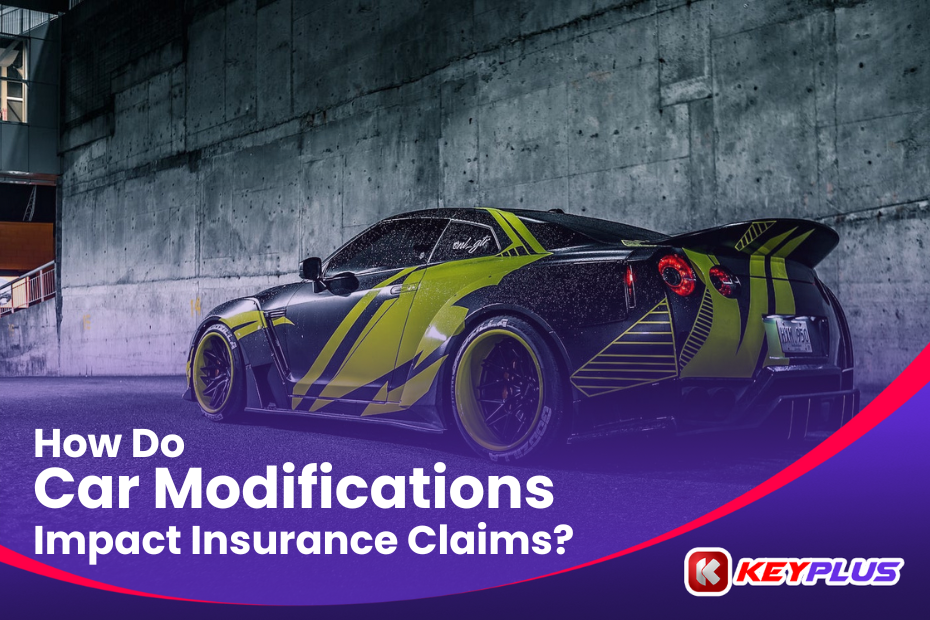
Most car enthusiasts prefer to upgrade or modify their cars to suit their preferences, such as changing sporty body kits, custom rims, upgraded sound systems, and engine tuning.
However, a crucial point many car owners overlook is whether car modifications affect insurance claims.
This guide explains how car modifications impact insurance coverage, claims approval, and what you should do to stay protected.
What Is A Car Modification?
Car modification refers to any changes made to a vehicle after it has left the manufacturer. These changes can range from simple cosmetic tweaks to complex performance upgrades. While some modifications are designed purely for aesthetics, others aim to improve the car’s functionality or performance.
Before modifying your car, it is best to review how the changes may affect your car insurance costs.
Different Types Of Car Modifications
1. Performance Modifications (Power & Handling)
Performance modifications are changes that improve a car’s performance. For example, upgrades to the brakes, gearbox, suspension, turbochargers, and other components.
2. Functional Modifications (Utility & Tech)
When a car’s features are changed or added, it is known as functional modification. Examples are as below:
- Air conditioning system
- Navigation system
- Parking sensors
- Additional car lights
3. Aesthetic Modifications (Appearance)
Aesthetic modification is the process of enhancing a vehicle’s aesthetics. Here are some examples:
- Front and rear bumpers
- Rooftop vents
- Paint for cars
- Back bumper reflector lights
- Tinted windows
Depending on the type of modification, it may improve the performance of your vehicle. But remember that it must be done legally and in line with the rules imposed by the Road Transport Department (JPJ).
How Modifications Impact Your Policy & Claims?
1. Insurance Claim Denial
If you modify your car but fail to declare it to your insurer, your insurance company may:
- Reject your claim entirely
- Reduce the claim payout
- Cancel or invalidate your policy
This is especially common for performance-related modifications, which insurers consider higher risk.
📌 Key rule: If your insurer doesn’t know about the modification, they are not obligated to cover it.
2. Limited Insurance Coverage
Standard comprehensive car insurance policies typically cover only factory-fitted parts, which means that aftermarket rims, body kits, sound systems, or accessories may not be compensated.
Besides, custom components require specialized add-on coverage, which is frequently more expensive.
3. Lower Payouts
If your car is a total loss, the payout may reflect only the standard factory value, not the added value of your modifications, resulting in a financial loss.
4. Higher Premiums
Performance upgrades like engine, suspension, and brakes, as well as high-value changes to your car’s appearance, such as custom paint and large sound systems, make it more expensive and riskier to repair, which increases your insurance premium.
Conclusion
Car modifications can enhance your driving experience, but they also come with important insurance implications. Whether it’s a cosmetic upgrade or a performance enhancement, any change from the manufacturer’s original specification can affect how your insurance policy responds during a claim.
Before you make any changes to your car, you should look over and compare your insurance options. Getting the right coverage is just as important as the upgrades you make.
Comparing policies from top car insurance Malaysia providers through platforms like Keyplus Malaysia can help drivers understand coverage terms, modification policies, and claim conditions before committing.